

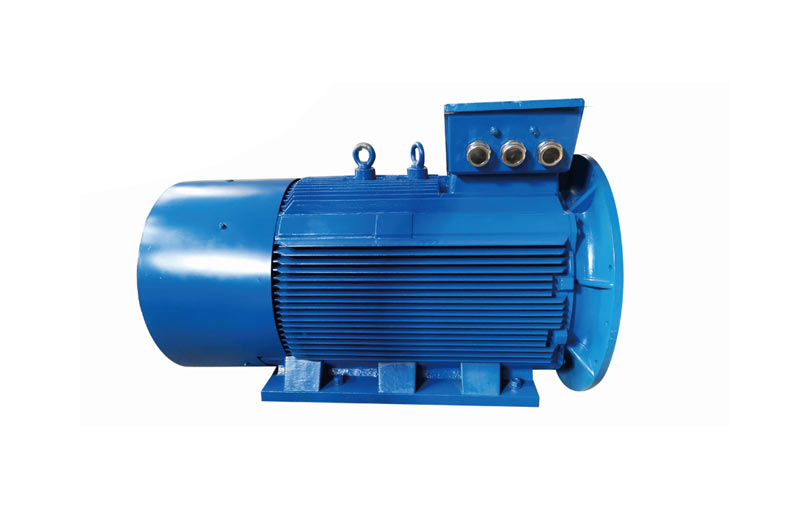

YVFF-H series Marine variable frequency speed regulation three-phase asynchronous motor

Product center
News Information
- Where does the noise from the motor come from?
- What are the differences between Marine motors and general motors?
- Analysis of the Causes of Motor Overload and Solutions
- What should I do if the Marine motor in Wuxi does not generate electricity or the voltage is abnormal?
- The hazards of motor shaft eccentricity and preventive measures
- What is the working principle of Marine electromechanical systems
- Usage methods and precautions for Marine hoisting motors in Wuxi
- How to deal with the challenges brought by a humid environment
- How should a linear motor be debugged?
- Motor equipment maintenance and repair: The key to ensuring stable power
Service Hotline:
Motor equipment maintenance and repair: The key to ensuring stable power
Release time:2025-06-20
In modern production and life, motor equipment can be regarded as the ubiquitous "power heart", from large machinery in factory workshops to daily household appliances. Its stable operation is directly related to production efficiency and the convenience of life. However, long-term operation and complex working conditions can easily cause various faults. Therefore, it is extremely important to master the knowledge of motor maintenance and repair.
I. Motor Foundation: Various Types and Structures Motors are classified into AC and DC types based on current. Among AC motors, induction motors are widely used in industrial production, home appliances and other fields due to their simple structure, low cost and stable operation. Synchronous motors, with their constant rotational speed and high power factor, are often found in scenarios where rotational speed accuracy is strictly required, such as power system generators and high-precision transmission devices. Although DC motors have a complex structure, they possess excellent speed regulation performance and play a crucial role in equipment such as electric vehicles and high-precision machine tools. From a structural perspective, an electric motor mainly consists of a stator and a rotor. The stator, as the stationary part, carries the winding. When current passes through, a magnetic field is generated. The rotor rotates under the influence of the stator magnetic field, achieving the conversion from electrical energy to mechanical energy. In addition, auxiliary components such as bearings, brushes, and end covers also perform their respective duties to ensure the smooth operation of the motor.
Ii. Common Faults: Precise Diagnosis is Key (1) Startup Difficulties: The motor remains stationary after being powered on, and the reasons may involve multiple aspects. If there is an open circuit or short circuit in the power supply side, poor contact of the switch or contactor, or an open circuit or short circuit inside the motor winding, the current path will be disrupted. At this point, a multimeter can be used to measure the power supply voltage, check the condition of the switch and contactor contacts, and use an insulation resistance meter to test the windings to identify the fault point. (2) Abnormal Heating: A normally operating motor generates a certain amount of heat, but a sudden increase in temperature sounds the alarm. Winding short circuit causes a sharp increase in current and a greater copper loss. Core short circuit leads to intensified hysteresis and eddy current losses. Excessive load, poor ventilation and heat dissipation (such as fan damage, air duct blockage, high ambient temperature), etc., can all cause the motor to overheat. In the face of this situation, an infrared thermometer can be used to monitor the temperature, an insulation resistance meter can be used to test the insulation, the fan can be inspected, the air duct can be cleaned, and the source of the heating can be determined. (3) Abnormal Vibration and Noise: If a motor that operates smoothly experiences severe vibration or shrill noise, it indicates mechanical or electrical faults. In terms of mechanics, there are issues such as bearing wear and lack of oil, misaligned installation of couplings, and unbalanced rotors. In terms of electrical aspects, short circuits and open circuits in windings, as well as operation with a missing phase, may all cause such problems. Noise characteristics can be identified by listening to the sound, and parameters can be detected by a vibration analyzer to assist in diagnosing faults.
Iii. Maintenance and Repair: Standardized Operation Ensures Performance (1) Maintenance Process Before maintenance, safely cut off the power supply first. Use a voltage detector to confirm that there is no electricity, and then hang a warning sign. Then, troubleshoot and conduct a detailed inspection of the motor's appearance, terminal blocks, winding resistance and insulation, mechanical components, etc. For damaged components such as windings and bearings, local repair or replacement should be selected based on the degree of damage. After the maintenance and replacement are completed, assemble in the original sequence. First, conduct a no-load test run to observe the operation and measure the current and voltage. Only when everything is normal can a load test run be carried out. (2) Maintenance Points: Regularly clean the dust and oil stains on the motor casing, internal air ducts, and winding surfaces on a daily basis to ensure good heat dissipation. Select the appropriate grease or lubricating oil based on the motor type and working conditions, and replenish or replace it regularly. Periodically measure the winding insulation with an insulation resistance meter, measure the winding resistance with a multimeter, and check the terminal blocks. At the same time, regularly inspect mechanical components such as bearings and couplings to ensure smooth mechanical transmission. Motor equipment maintenance and repair is a systematic and professional task that requires practitioners to have solid knowledge, rich experience and a rigorous attitude. Only in this way can the stable operation of motors be ensured and strong impetus be continuously injected into production and life.
Follow us

Wechat service
Mobile website
Add:No. 28-74-1, Huibei Road, Wuxi City, Jiangsu Province, China (Inside Wuxi Optoelectronic New Materials Science and Technology Park
Copy rights reserved © 2025 Wuxi Silida Marine Engineering Equipment Co., LTD 苏ICP备88888888号