

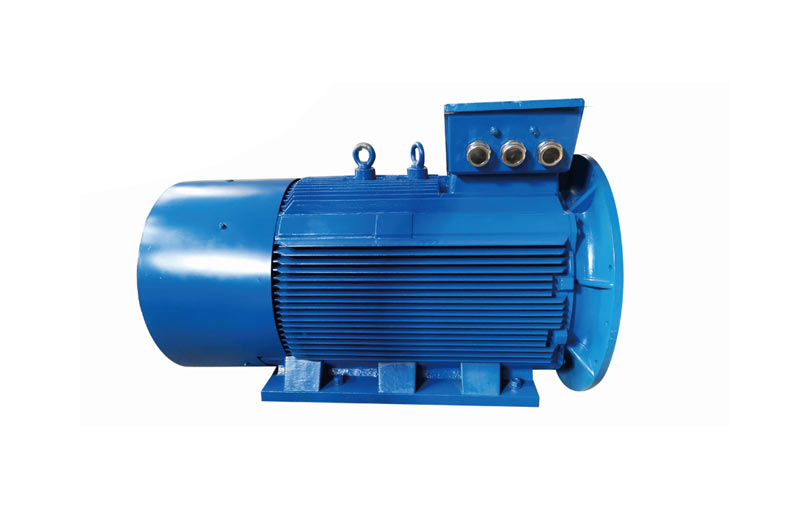

YVFF-H series Marine variable frequency speed regulation three-phase asynchronous motor

Product center
News Information
- Where does the noise from the motor come from?
- What are the differences between Marine motors and general motors?
- Analysis of the Causes of Motor Overload and Solutions
- What should I do if the Marine motor in Wuxi does not generate electricity or the voltage is abnormal?
- The hazards of motor shaft eccentricity and preventive measures
- What is the working principle of Marine electromechanical systems
- Usage methods and precautions for Marine hoisting motors in Wuxi
- How to deal with the challenges brought by a humid environment
- How should a linear motor be debugged?
- Motor equipment maintenance and repair: The key to ensuring stable power
Service Hotline:
Analysis of the Causes of Motor Overload and Solutions
Release time:2025-07-30
In industrial production and equipment operation, motors, as the core power source, their stable operation is directly related to production efficiency and equipment safety. However, motor overload occurs frequently. It refers to the situation where the actual load of the motor exceeds the rated load during operation, thereby causing problems such as excessive current and temperature rise. If the motor is in an overloaded state for a long time, it is very likely to burn out and may also cause related equipment failure, resulting in serious economic losses. Therefore, delving deeply into the causes of motor overload and identifying effective solutions holds significant practical significance.
I. Common Culprits of Motor Overload
Motor overload is not accidental but the result of the combined effect of multiple factors. It can mainly be attributed to the following aspects
1. Mechanical load "overweight" or "jammed"
It is common for the actual load of the equipment to exceed the rated power of the motor. For instance, if the conveyor belt is blocked by debris, the head of the water pump is too high, or the reducer malfunctions, the motor will be "overwhelmed". At the same time, the jamming of mechanical transmission components will also exert tremendous pressure on the motor. Issues such as bearing wear, poor gear meshing, and eccentricity of couplings will cause a sudden increase in the motor's operating resistance, thereby leading to overload.
2. Inherent deficiencies in motor selection
Improper motor selection is an "invisible killer" that causes overload. If the rated power of the motor is less than the actual demand, it is like asking a small horse to pull a big cart, and overload is bound to occur. In addition, a mismatch between the motor's rotational speed, torque and load can also cause problems. For instance, if a high-speed motor is selected for a low-speed load without a reduction device, the motor cannot meet the load requirements, which may lead to overload.
3. The power supply is "not powerful" or "malfunctioning"
Problems related to power supply should not be ignored either. Abnormal voltage is a common cause. If the voltage is too low, the output torque of the motor will decrease. To maintain operation, the current will increase. Excessively high voltage will intensify winding losses. When the three-phase voltage is unbalanced and the deviation exceeds 5%, it will cause the current in one phase to be too large. For three-phase motors, a phase loss is an even more fatal blow. Operating with a phase loss will cause the three-phase motor to switch to single-phase operation, resulting in a sharp increase in current and an extremely high risk of overload.
4. The motor itself is "sick"
A malfunction of the motor itself can also cause overload. Winding insulation aging or short circuit will cause abnormal increase in current. Bearing wear or poor lubrication will increase operating resistance and even cause rotor jamming. For asynchronous motors, rotor bar breakage will reduce their efficiency, increase the current and cause overload.
5. Environment and operation "hold back"
Environmental and operational factors can also have an impact on motor operation. If the ambient temperature is too high, exceeding the allowable operating temperature of the motor, it will cause poor heat dissipation of the motor and make it prone to overload. Frequent starting, braking or forward and reverse rotation, as the starting current is 5 to 7 times the rated current, frequent operation will cause cumulative overload of the motor. If the motor vent is blocked and the cooling fan fails, the heat cannot be dissipated, which can also lead to overload.
Ii. Effective Solutions to Motor Overload
In response to the causes of the above-mentioned motor overload, we can adopt the following corresponding solutions:
1. "Reduce the load" and "loosen the constraints" on mechanical loads
It is necessary to check in a timely manner whether the equipment load is abnormal, such as clearing debris from the conveyor belt, adjusting the water pump valve to reduce the head and alleviate the burden on the motor. At the same time, inspect and repair the transmission components, replace worn bearings, adjust the meshing clearance of gears, and correct the concentricity of couplings to make the motor run more smoothly and reduce resistance.
2. Optimize motor selection "tailor-made"
Calculate the power demand based on the actual load and replace the motor with one that matches the rated power. Usually, a margin of 10% to 20% should be reserved to deal with unexpected situations. If the motor speed does not match the load, a reducer can be installed or a motor with an appropriate speed can be replaced to ensure a perfect fit between the motor and the load.
3. Stable power supply "Safeguards"
Install a voltage stabilizer or voltage regulator to ensure that the voltage is within ±5% of the rated value, providing a stable voltage environment for the motor. Check the balance of three-phase voltage and promptly repair line faults such as broken lines and poor contact. In addition, phase loss protection devices such as thermal relays and motor protectors should be installed to prevent three-phase motors from operating with phase loss and to avoid sudden surges in current.
4. To cure or upgrade the motor
Regularly test the insulation resistance of the windings. If a short circuit problem is found, repair or replace the windings in time. Regularly apply grease to the bearings and replace damaged bearings. If the rotor bars break, the rotor or motor should be replaced in time to ensure the good performance of the motor itself.
5. Improving the Environment and Operation "Creating Good conditions"
To lower the ambient temperature, cooling fans and ventilation ducts can be installed to keep the motor away from heat sources and enhance the motor's heat dissipation effect. Reduce frequent starts and stops. When necessary, use variable frequency speed control motors to lower the starting current through soft start and reduce the risk of overload. Regularly clean the motor ventilation ports to ensure smooth heat dissipation and allow the motor to operate in a suitable environment.
6. Install protective devices to be prepared for any eventuality
Install thermal relays, overload protectors or intelligent motor protectors to monitor current and temperature in real time. Once an overload occurs, the power will be automatically cut off to ensure the safety of the motor. For important equipment, current monitoring instruments are equipped to monitor the operating status in real time, promptly identify and handle problems.
The core issue of motor overload lies in the mismatch or fault among "load - motor - power supply". To solve the problem of motor overload, it is necessary to conduct investigations and handle it from multiple dimensions such as mechanical, electrical and environmental aspects. In daily maintenance, regularly checking the operating status of the equipment, cleaning the motor, and monitoring the current and temperature can effectively prevent the occurrence of overload problems, ensure the stable operation of the motor, improve production efficiency, and reduce the risk of equipment failure.
Hengda Motor has always been dedicated to the research and development, production and service of various types of motors. With advanced technology and equipment, lean manufacturing processes, reliable product quality and satisfactory after-sales service, the company provides customers with the most suitable professional motor solutions and creates greater social value.
Follow us

Wechat service
Mobile website
Add:No. 28-74-1, Huibei Road, Wuxi City, Jiangsu Province, China (Inside Wuxi Optoelectronic New Materials Science and Technology Park
Copy rights reserved © 2025 Wuxi Silida Marine Engineering Equipment Co., LTD 苏ICP备88888888号