

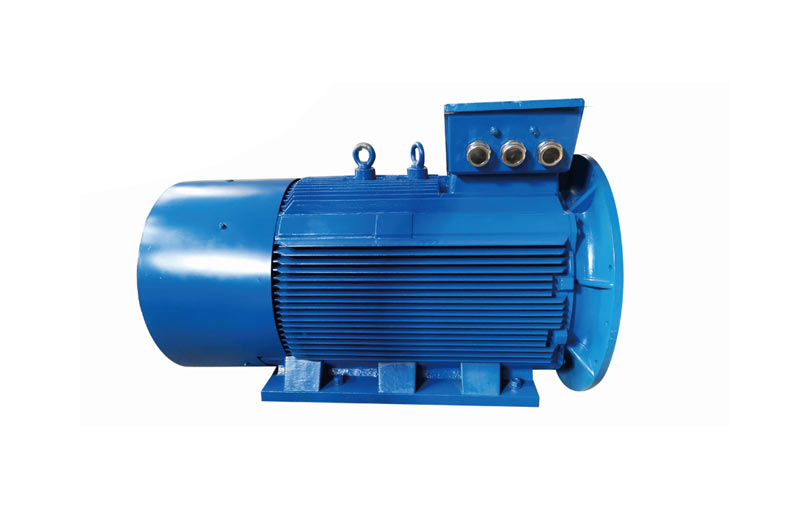

YVFF-H series Marine variable frequency speed regulation three-phase asynchronous motor

Product center
News Information
- Where does the noise from the motor come from?
- What are the differences between Marine motors and general motors?
- Analysis of the Causes of Motor Overload and Solutions
- What should I do if the Marine motor in Wuxi does not generate electricity or the voltage is abnormal?
- The hazards of motor shaft eccentricity and preventive measures
- What is the working principle of Marine electromechanical systems
- Usage methods and precautions for Marine hoisting motors in Wuxi
- How to deal with the challenges brought by a humid environment
- How should a linear motor be debugged?
- Motor equipment maintenance and repair: The key to ensuring stable power
Service Hotline:
How should a linear motor be debugged?
Release time:2025-06-30
A linear motor is a type of motor that directly converts electrical energy into linear motion. Traditional rotary motors need to rely on some mechanisms to achieve linear motion, such as lead screws. The disadvantage of linear motors is that their control is complex and the cost is high. Now let's take a look at some relevant experiences regarding the debugging of linear motors. I hope it can be of help to you.
1. Wiring: Connect the power supply of the driver. Generally, the driver has a control power supply and a motor power supply, which are different. Make sure they are not connected in reverse. Connecting them in reverse will burn out the driver. Then connect the linear motor to the driver, install the corresponding UVW connections, and connect the PE wires. Finally, there is feedback. Hall is generally five wires: power, ground, and A/B/C. The grating encoder is generally an A-Quad-B output, and the corresponding connection is sufficient.
2. Debugging: Generally, the drive communicates with the computer via RS-232. Power on the drive and connect the communication in the software.
3. Next, it's time to set up the data model of the linear motor. Generally, you need to fill in the continuous current of the motor, ****** speed, magnetic pole pitch, etc., the resolution of position feedback, and some protection Settings of the driver. Note that only when the Settings are reasonable can it be completed; otherwise, the drive will report an error.
4. When entering the actual debugging process, the first steps are the current loop, commutation loop, speed loop, and position loop. The process of PID tuning requires an individual's understanding of PID, long-term experience, and patient tuning. Eventually, there will definitely be a good result.
5. Operation: After the debugging is completed, the motor can start moving. Generally, the driver can be programmed or accept instructions, depending on the situation.
Follow us

Wechat service
Mobile website
Add:No. 28-74-1, Huibei Road, Wuxi City, Jiangsu Province, China (Inside Wuxi Optoelectronic New Materials Science and Technology Park
Copy rights reserved © 2025 Wuxi Silida Marine Engineering Equipment Co., LTD 苏ICP备88888888号