

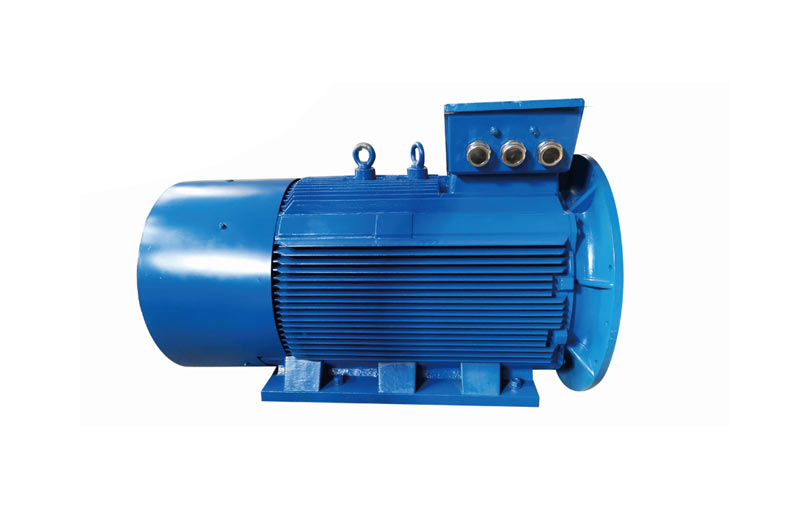

YVFF-H series Marine variable frequency speed regulation three-phase asynchronous motor

Product center
News Information
- Where does the noise from the motor come from?
- What are the differences between Marine motors and general motors?
- Analysis of the Causes of Motor Overload and Solutions
- What should I do if the Marine motor in Wuxi does not generate electricity or the voltage is abnormal?
- The hazards of motor shaft eccentricity and preventive measures
- What is the working principle of Marine electromechanical systems
- Usage methods and precautions for Marine hoisting motors in Wuxi
- How to deal with the challenges brought by a humid environment
- How should a linear motor be debugged?
- Motor equipment maintenance and repair: The key to ensuring stable power
Service Hotline:
What should I do if the Marine motor in Wuxi does not generate electricity or the voltage is abnormal?
Release time:2025-07-22
Nothing lasts forever. Various problems are bound to occur during daily use. What faults can Marine motors have? To help everyone understand better, today we will introduce in detail the reasons why Marine motors do not generate electricity or have abnormal voltage and the measures to be taken.
Analysis of the reasons for no power generation or abnormal voltage
The fuse is blown
(2) The voltmeter is damaged
(3) The voltmeter is inaccurate
(4) Poor contact of the voltage regulator pins
(5) The rotary rectifier module is damaged
(6) Loss of residual magnetism
(7) Wiring error
(8) The magnetic field coil of the exciter is open-circuited
(9) Loose joints or poor contact
(10) The armature coil of the generator is open-circuited
(11) Short circuit of the generator armature coil
(12) The armature coil of the exciter is open-circuited or short-circuited
(13) Abnormal rotational speed
(14) The regulator protection turn-off circuit operates
(15) The regulator is damaged
The handling methods for Marine motors not generating electricity or having abnormal voltage
After confirming that the circuit is normal, replace the fuse and then close the switch.
(2) Use the voltage range of a multimeter to directly measure the terminal voltage of the generator.
(3) Regularly calibrate the electricity meter. If it is inaccurate, replace it
(4) Check whether the 50Hz, 60Hz and 6, 7 pins of the voltage regulator are loose
(5) Connect the rotary rectifier module to the main rotor
The connection wire of the magnetic field can be removed from the door. The rotating rectifier module can be measured with a multimeter or a light bulb. If it is damaged, it needs to be replaced.
(6) Connect the 12V battery to the stator coil of the AC exciter through a diode for magnetization once. Connect the positive terminal to X and the negative terminal to XX(for about 2 seconds).
(7) Conduct a detailed inspection and connect them correctly according to the wiring diagram
(8) Twist the broken wire together, solder it firmly with solder, and wrap it with insulating material on the outside.
(9) After cleaning the joint, reconnect it properly
(10) Locate the broken circuit and re-weld and bandage it
(11) A short circuit can cause severe heating, and the coil should be replaced
(12) Locate the fault point and replace the coil
(13) Check the generator speed with a tachometer or frequency meter
(14) Adjust the regulator after correction according to the regulator manual
(15) Replace the regulator
Follow us

Wechat service
Mobile website
Add:No. 28-74-1, Huibei Road, Wuxi City, Jiangsu Province, China (Inside Wuxi Optoelectronic New Materials Science and Technology Park
Copy rights reserved © 2025 Wuxi Silida Marine Engineering Equipment Co., LTD 苏ICP备88888888号