

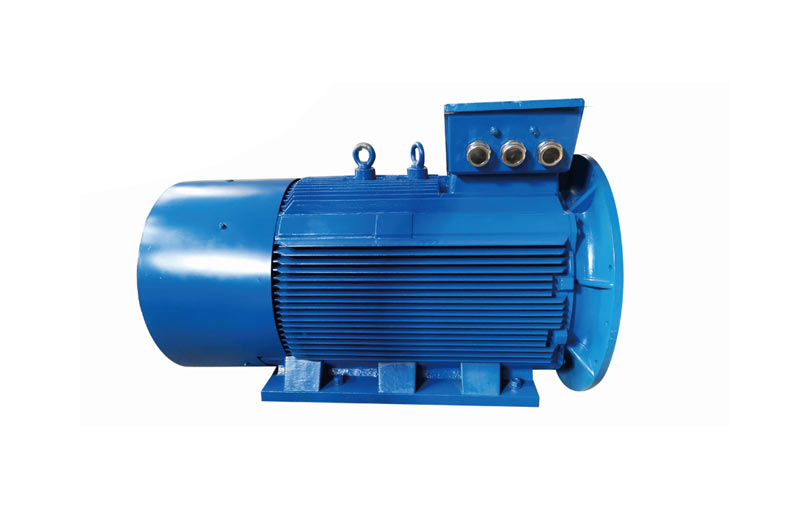

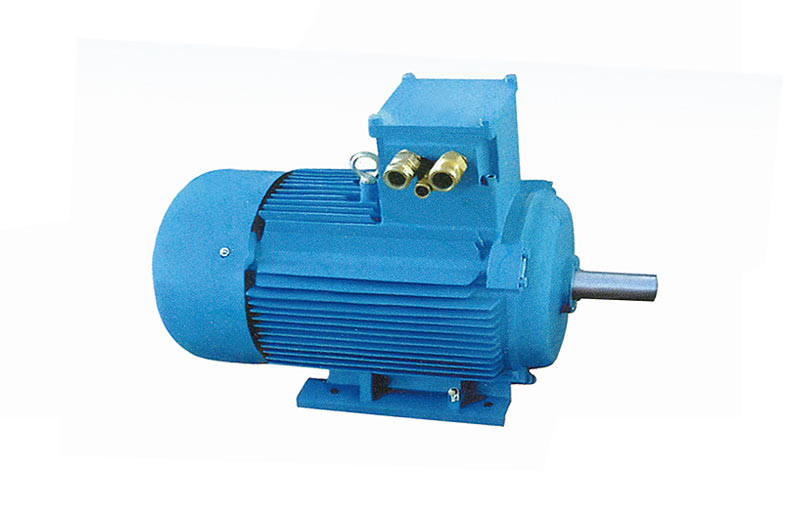
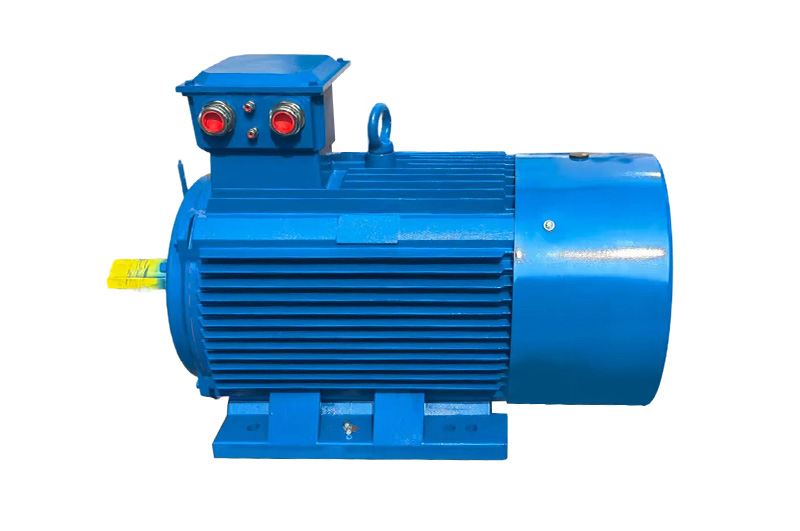
YVFF-H series Marine variable frequency speed regulation three-phase asynchronous motor

Product center
News Information
- Where does the noise from the motor come from?
- What are the differences between Marine motors and general motors?
- Analysis of the Causes of Motor Overload and Solutions
- What should I do if the Marine motor in Wuxi does not generate electricity or the voltage is abnormal?
- The hazards of motor shaft eccentricity and preventive measures
- What is the working principle of Marine electromechanical systems
- Usage methods and precautions for Marine hoisting motors in Wuxi
- How to deal with the challenges brought by a humid environment
- How should a linear motor be debugged?
- Motor equipment maintenance and repair: The key to ensuring stable power
Service Hotline:
What are the differences between Marine motors and general motors?
Release time:2025-08-01
Compared with general motors, Marine motors have significant differences in many aspects, which are mainly reflected in design, performance requirements, applicable environments and electrical characteristics. Now let's take a closer look
I. Design Differences
1. Explosion-proof requirements:
Marine motors generally have explosion-proof requirements because there may be flammable gas components in the nacelle. Therefore, the casing design of Marine motors is relatively complex, and special explosion-proof structures and technologies are adopted to ensure safe operation in flammable environments.
General motors usually do not have such strict explosion-proof requirements, and their design is more focused on meeting conventional industrial or household needs.
2. Enclosure protection grade:
The enclosure protection grade of Marine motors is usually high to withstand the high humidity, salt spray corrosion and possible large wave impact in the Marine environment. For instance, Marine motors operating on the deck may require a protection level of IP66.
The enclosure protection grade of a general motor is determined by the specific application scenario and may be relatively low.
3. Airtightness:
Marine motors have good sealing performance. By using technologies such as sealing rings and heat shrink tubing, moisture can be prevented from entering the internal windings of the motor, thus protecting the motor from erosion by the Marine environment.
The airtightness requirements for general motors may not be as strict as those for Marine motors.
Ii. Performance Requirements
1. Insulation class
The insulation class of Marine motors is usually high, using F-class or H-class insulation materials to ensure good insulation performance even in a humid environment.
The insulation class of a general motor is determined by factors such as rated power and usage environment, and may be relatively low.
2. Corrosion resistance:
The enclosures of Marine motors are usually made of corrosion-resistant materials such as aluminum alloy or stainless steel, and the terminal blocks are also nickel-plated to resist salt spray corrosion.
The casing material of a general motor may be selected based on factors such as cost and processability, and the requirement for corrosion resistance may not be as high as that of Marine motors.
3. Short-term overload capacity:
Marine motors such as anchor motors, etc., need to withstand short-term overload conditions such as being locked for more than one minute and the output torque reaching 1.8 times the rated value.
General motors usually do not need to have such a high short-term overload capacity.
Iii. Applicable Environment
1. Marine environment
Marine motors are constantly exposed to complex and harsh Marine environments and need to cope with challenges such as high humidity, salt spray corrosion, frequent vibration and shock, as well as a wide temperature range.
General motors are usually suitable for conventional industrial or household environments and have relatively low requirements for environmental adaptability.
2. Voltage and Frequency:
The power supply system on ships is generally a 60Hz power source with a voltage of 440V, so Marine motors are basically 440V 60Hz motors.
General motors usually use a 50Hz power supply of 380V.
Iv. Electrical Characteristics
1. Power adapter feature
Marine motors need to be customized to match the 440V/60Hz power supply of the ship's power grid.
General motors are usually designed based on conventional power supplies.
2. High efficiency and energy saving
With the development of technology, Marine motors are gradually adopting high-efficiency and energy-saving technologies such as permanent magnet synchronous motors to enhance energy efficiency and meet the demands of new energy ships.
General motors are also developing towards high efficiency and energy conservation, but the requirements for Marine motors in this regard may be more urgent and strict.
Marine motors and general motors have significant differences in design, performance requirements, applicable environments and electrical characteristics. These differences enable Marine motors to better adapt to the complexity and particularity of the Marine environment, ensuring the safe and efficient operation of ships.
Follow us

Wechat service
Mobile website
Add:No. 28-74-1, Huibei Road, Wuxi City, Jiangsu Province, China (Inside Wuxi Optoelectronic New Materials Science and Technology Park
Copy rights reserved © 2025 Wuxi Silida Marine Engineering Equipment Co., LTD 苏ICP备88888888号