

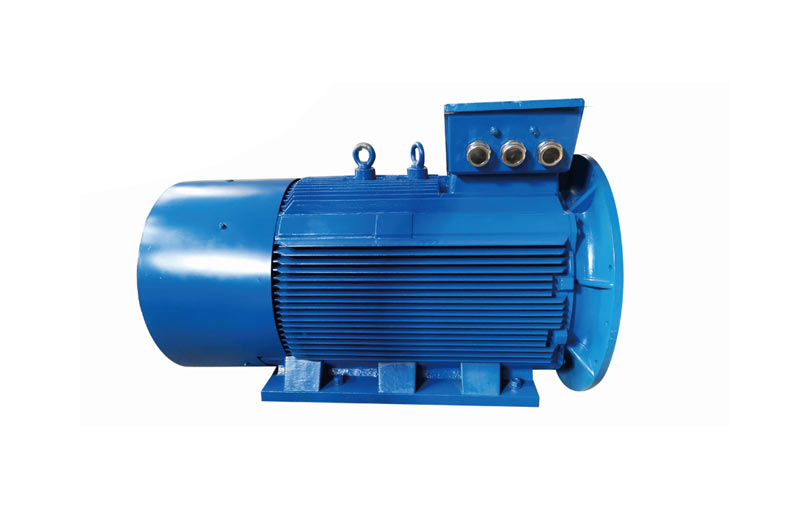

YVFF-H series Marine variable frequency speed regulation three-phase asynchronous motor

Product center
News Information
- Where does the noise from the motor come from?
- What are the differences between Marine motors and general motors?
- Analysis of the Causes of Motor Overload and Solutions
- What should I do if the Marine motor in Wuxi does not generate electricity or the voltage is abnormal?
- The hazards of motor shaft eccentricity and preventive measures
- What is the working principle of Marine electromechanical systems
- Usage methods and precautions for Marine hoisting motors in Wuxi
- How to deal with the challenges brought by a humid environment
- How should a linear motor be debugged?
- Motor equipment maintenance and repair: The key to ensuring stable power
Service Hotline:
Where does the noise from the motor come from?
Release time:2025-08-03
According to the different ways in which motor noise is generated, noise can be roughly divided into three major categories:
① Electromagnetic noise;
② Mechanical noise;
③ Aerodynamic noise.
1. Electromagnetic noise
Electromagnetic noise is mainly generated by the air-gap magnetic field acting on the radial component of the stator core. It propagates outward through the yoke, causing the stator core to vibrate and deform. Secondly, there is the tangential component of the air-gap magnetic field, which is opposite to the electromagnetic torque and causes local deformation and vibration of the core teeth. When the radial electromagnetic force wave approaches the natural frequency of the stator, resonance will occur, significantly enhancing vibration and noise, and even threatening the safety of the motor.
2. Methods for reducing electromagnetic noise:
1) Try to use sinusoidal windings as much as possible to reduce harmonic components;
2) Select an appropriate air-gap magnetic flux density. It should not be too high, but if it is too low, it will affect the utilization rate of the material.
There are many reasons for the loud noise during the operation of a motor. To sum up, the main ones are as follows:
① The motor's anchor bolts are not installed firmly or are not strong enough, resulting in significant vibration and high noise during operation.
② Motor phase loss or small horse pulling a big cart causing electrical overload leads to relatively large electromagnetic sounds during abnormal operation.
③ Motor bearing damage, running of the inner or outer ring, friction between the rotating and stationary parts of the motor, etc., generate noise;
④ Excessively high power supply voltage, insufficient silicon steel sheets, or damage to the insulation of silicon steel sheets can cause magnetic circuit saturation, generating high-decibel electromagnetic sounds and simultaneously generating a large amount of heat.
⑤ The breakage of the squirrel-cage bars in the motor causes an imbalance in torque output, resulting in vibration during operation and abnormal noise, etc.
Follow us

Wechat service
Mobile website
Add:No. 28-74-1, Huibei Road, Wuxi City, Jiangsu Province, China (Inside Wuxi Optoelectronic New Materials Science and Technology Park
Copy rights reserved © 2025 Wuxi Silida Marine Engineering Equipment Co., LTD 苏ICP备88888888号