

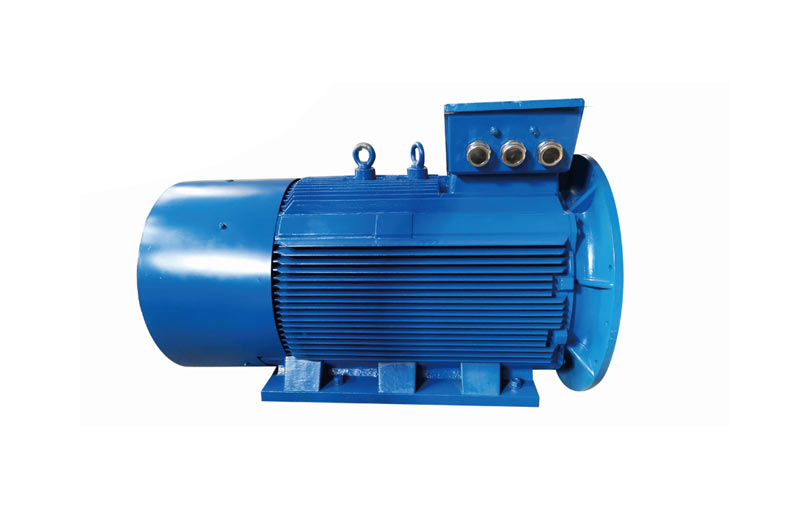

YVFF-H series Marine variable frequency speed regulation three-phase asynchronous motor

Product center
News Information
- Where does the noise from the motor come from?
- What are the differences between Marine motors and general motors?
- Analysis of the Causes of Motor Overload and Solutions
- What should I do if the Marine motor in Wuxi does not generate electricity or the voltage is abnormal?
- The hazards of motor shaft eccentricity and preventive measures
- What is the working principle of Marine electromechanical systems
- Usage methods and precautions for Marine hoisting motors in Wuxi
- How to deal with the challenges brought by a humid environment
- How should a linear motor be debugged?
- Motor equipment maintenance and repair: The key to ensuring stable power
Service Hotline:
Control of forward and reverse rotation of electric motors and wiring methods
Release time:2025-06-18
Can a three-phase asynchronous motor rotate in both forward and reverse directions? How to achieve and control it? The method for reversing the motor is to change the phase sequence of any two phases of the power supply fed into the stator winding of the motor on the basis of the forward rotation circuit.
The control circuit diagram for the forward and reverse rotation of the motor is shown in the figure. To enable the three-phase asynchronous motor to rotate in both forward and reverse directions, two contactors KM1 and KM2 are generally used to switch the phase sequence of the three-phase power supply of the motor. However, the two contactors cannot be engaged. If they are engaged simultaneously, it will cause a short circuit accident in the power supply. To prevent such an accident from happening, We should generally adopt reliable interlocks in circuits.
For this, the specific analysis of the wiring diagram is as follows:
I. Ongoing Work:
Close the air switch QF and connect the three-phase power supply
2. When we press the forward start button SB3, KM1 is energized, attracts and self-locks, the main contacts close and the motor is connected. At this time, the phase sequence of the motor is L1, L2, L3, which means it is running in the forward direction.
Ii. Reverse Start
Close the air switch QF and connect the three-phase power supply
After pressing the reverse start button SB2, KM2 is energized and engaged, self-locking through the auxiliary contacts. The normally open main contacts close and the phase sequence of the three-phase power supply of the motor is changed. At this time, the phase sequence of the motor is L3, L2, L1, that is, it is running in reverse.
Iii. Internet Link: Online sections with prohibited functions can also play a role in safety protection
Contactor interlock: When the KM1 coil circuit is connected in series with the normally closed auxiliary contact of KM2, the KM2 coil circuit is connected in series with the normally closed contact of KM1. When the coil of the forward-rotating contactor KM1 is energized and operates, the auxiliary normally closed contact of KM1 breaks the circuit of the coil of KM2. If KM1 is to be energized and attracted, KM2 must be de-energized and released first, so that its auxiliary normally closed contact can reset. This prevents the interphase short circuit caused by the simultaneous attracting of KM1 and KM2. This circuit link is the interlocking link.
2. Button interlock: This refers to the adoption of a forward and reverse control circuit method for controlling button operations in the circuit. Buttons SB2 and SB3 both have two normally open contacts and two normally closed contacts, which are respectively connected to the loops of the KM1 and KM2 coils. For instance, the normally open contact of button SB2 is connected in series with the coil of contactor KM2, while the normally closed contact is connected in series with the coil circuit of contactor KM1. The normally open contact of button SB3 is connected in series with the coil of contactor KM1, while the normally closed contact is connected in series with the coil circuit of KM2. In this way, when SB2 is pressed, only the coil of contactor KM2 can be energized while KM1 is de-energized. When SB3 is pressed, only the coil of contactor KM1 can be energized while KM2 is de-energized. If both SB2 and SB3 are pressed simultaneously, neither of the two contactor coils can be energized. Therefore, the role of the Internet has been brought into play.
Note: The KM1 and KM2 coils cannot be energized simultaneously; otherwise, it is easy to cause a short circuit in the main circuit power supply. Once it operates incorrectly, the danger is quite high.
When the motor is starting (or running in reverse), there is no need to press the stop button first. Instead, you can directly press the reverse (or forward) start button, thus making the motor run in the reverse direction.
V. The overload protection of the motor is generally accomplished by the thermal relay FR.
Wiring diagram for reversible operation control of electric motors
Vi. Debugging of the reversible operation control Circuit for the motor
1. We usually check whether the wiring of the main circuit is correct. To ensure that the phase sequence of the motor can be reliably swapped when the two contactors operate, when wiring, the upper port wiring of the contactors should be kept consistent, and the phase should be adjusted at the lower port of the contactors.
2. After checking that the wiring is correct, conduct a power-on test. To prevent accidents during the power-on test, the wiring of the motor should be disconnected first.
Follow us

Wechat service
Mobile website
Add:No. 28-74-1, Huibei Road, Wuxi City, Jiangsu Province, China (Inside Wuxi Optoelectronic New Materials Science and Technology Park
Copy rights reserved © 2025 Wuxi Silida Marine Engineering Equipment Co., LTD 苏ICP备88888888号